Aria for delivery consultants

Spend more of the engagement improving delivery
Aria connects projects, people, time and money so you and your client can examine the work behind a delivery problem. Build a shared picture for the decisions you need to make, and help the team keep using it when you step back. Your expertise and the client relationship stay with you.
14 days to explore Aria · No credit card required

How Aria helps delivery consultants
Start the engagement with a clearer route to the project information you need, rather than rebuilding every report before the useful conversations begin.
Use the project plan, time recorded and team capacity to explain your recommendations. Highlight any gaps in the information.
Leave the permanent team with a working view and an agreed routine, rather than a spreadsheet only you know how to maintain.
Useful throughout the engagement

When you are getting to know the client
The plans already exist, but they live in different tools and everyone explains status differently. You need to understand which records are useful, where the gaps are and which questions need a conversation with the team.

When you are helping leaders make changes
One person sees a resourcing problem, another sees a margin problem and another sees an awkward client commitment. You need enough common context to explain the trade-offs and help them agree what to do.
When you are preparing to step away
The new reporting routine is only useful if someone can keep it going. The handover needs owners, understandable records and a place the team can return to when the next project changes.
Sound familiar

Two days a week goes surprisingly quickly on finding the facts
You are brought in to improve delivery, but the first few sessions disappear into collecting project plans, checking hours and asking why the resource sheet does not match what people are doing.

Every new client means rebuilding a familiar picture
Different agency, different tools, same work to connect the plan, the team and the cost. You end up recreating a useful view before you can use your experience on the problem itself.

The improvement depends on you continuing to maintain it
You introduce a sensible process and a better report. Then the engagement ends, the team gets busy and the spreadsheet gradually becomes a record of how things used to work.
Your value is in diagnosis, leadership and helping people change how they work. The system around that expertise should make it easier to apply and easier for the client to continue.
A shared picture for your recommendations
Aria is agency management and PSA software for agencies and consultancy firms. It gives you and the client a place to examine recorded project work, commitments, time and financial context while you guide the decisions.
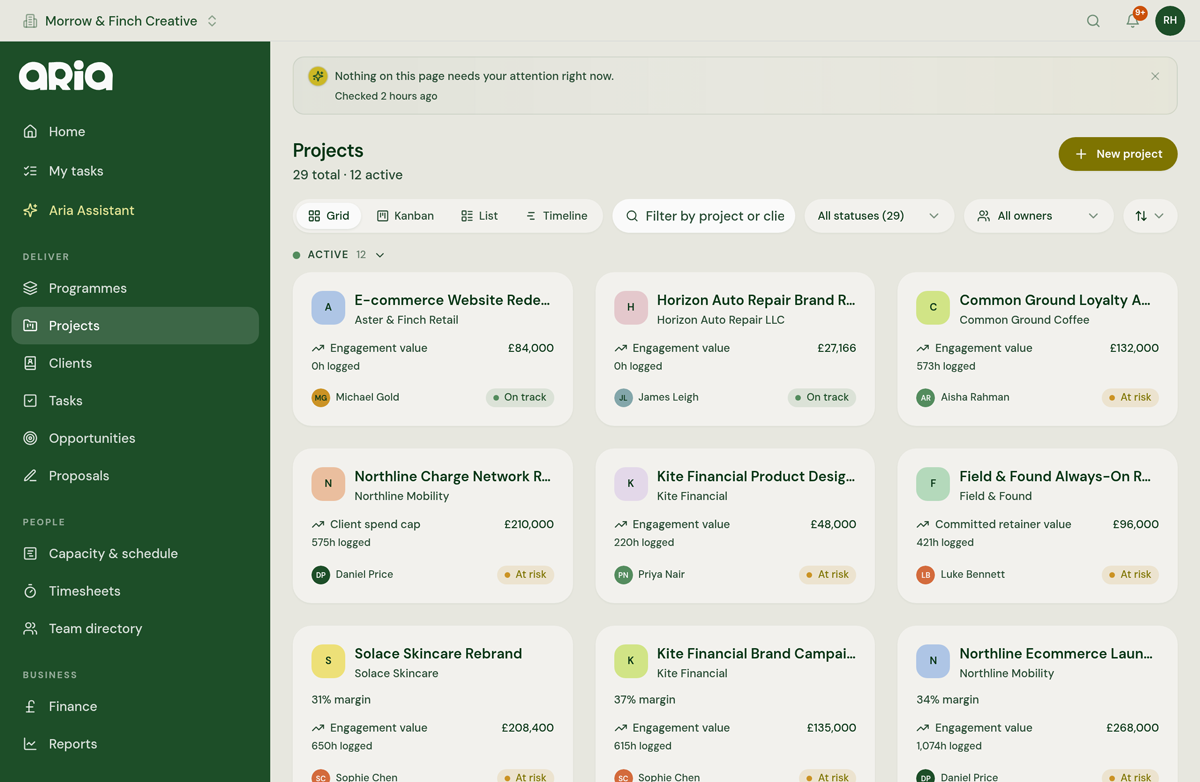
The first review needs useful evidence
Start with the plans, tasks, milestones, logged hours and budgets the client can supply. Agree what belongs in the shared view and what needs checking with the people closest to the work. A recorded gap can be as useful as a reassuring status if it tells you what to investigate next.
Upload the client's Statement of Work and Aria proposes a structured delivery plan, complete with milestones, tasks, people and financial forecasts, for you to review with the client. Bring a representative project, Statement of Work or CSV export to a walkthrough. We can examine the current setup and import options with you, so you know what needs mapping or review before recommending a route to the client.
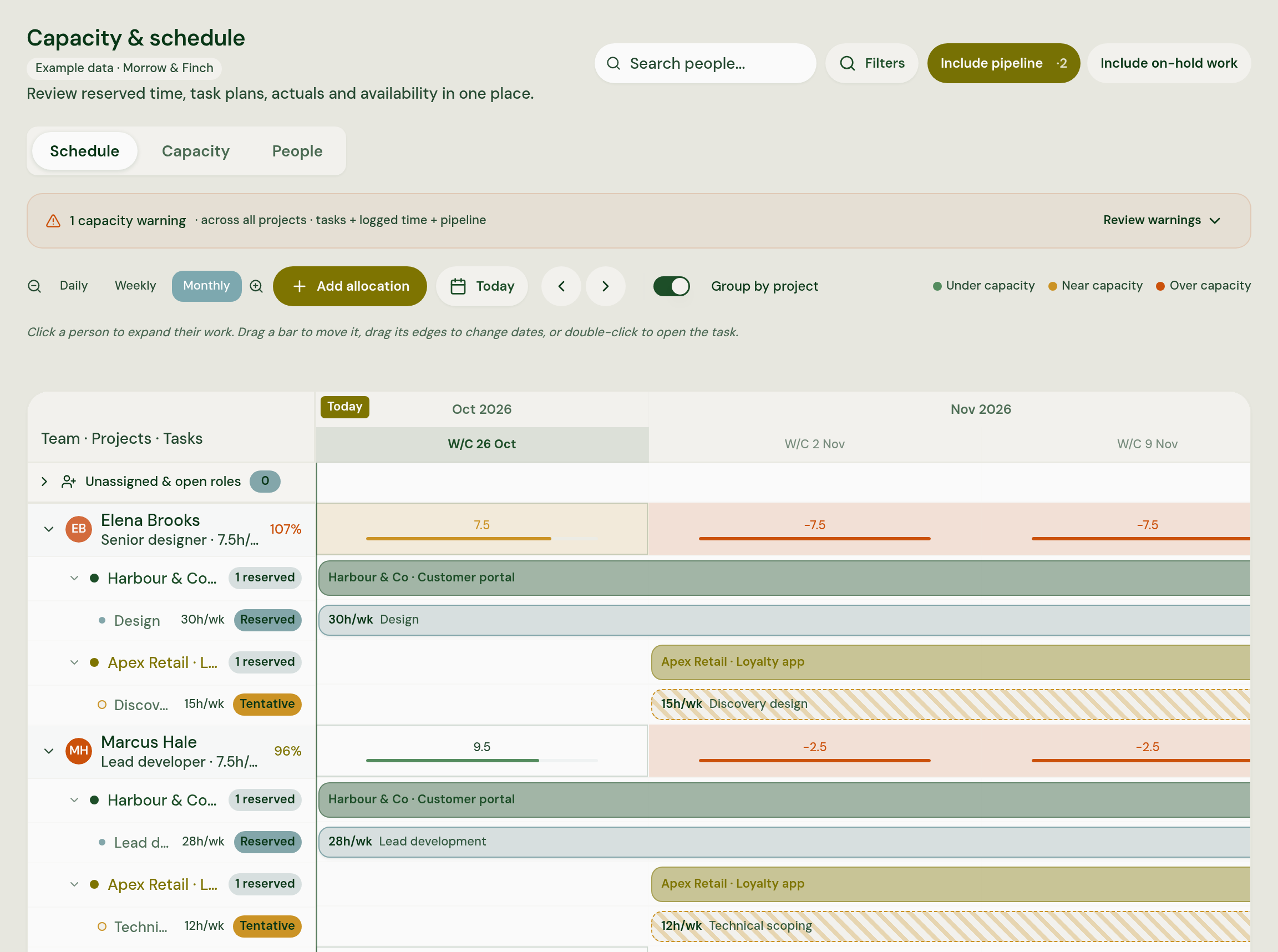
A recommendation needs more than a red project
Review project context alongside bookings and available capacity. Examine work-at-risk and calculated-health explanations, distinguishing any manually set status. Where project financial inputs are incomplete, keep those gaps in the conversation rather than treating the figure as settled.
You can help leaders compare the practical options: changing a commitment, discussing scope, finding capacity or improving the records behind the forecast. Aria does not make the client’s commercial decisions or turn an imported project into a complete diagnosis.
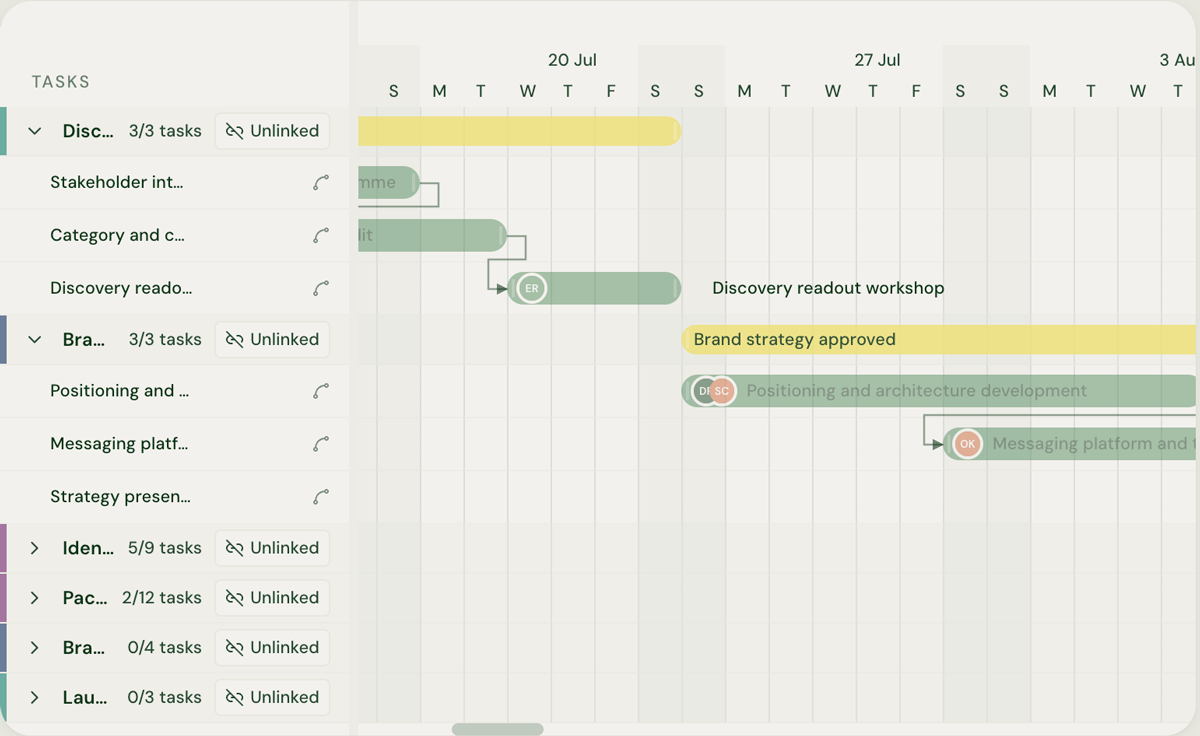
The handover needs to work without you in every meeting
Help the team agree who maintains plans, who checks time records and who reviews delivery concerns. Aria’s shared project views and selected client-portal information can support those routines after the engagement.
The lasting value still depends on ownership and adoption. A platform can give the client somewhere to continue; you help make continuing worthwhile.
The tools that support an advisory engagement

Projects and portfolio
Review plans, milestones and recorded progress with the people who know the work, so diagnosis starts from more than a summary deck.

Capacity and resource planning
Inspect commitments and available hours before recommending a change that depends on someone working elsewhere.

Project financial context
Discuss recorded effort, project costs and missing inputs alongside delivery decisions, within the client’s permissions.

Work at risk and project health
Use plan-based concerns and explained health calculations as questions to investigate, with the client’s judgement alongside yours.

Time and reporting assistance
Introduce reviewable time suggestions and status drafts that the client team can maintain as part of running the work.

Shared project and client views
Give the permanent team a place to return to and share selected tasks, milestones and progress with clients where appropriate.
Work with the tools the client already uses
Aria connects with Gmail, Outlook, Google Calendar, Outlook Calendar, Fireflies.ai, Jira, Xero, Slack and Microsoft Teams. Email, calendar and meeting tools add context through background updates, alongside the work the client records.
Agree the useful data and permissions with the client. Connecting a tool is not the same as transferring every historic conversation or making every record visible to you. The right starting point is one you can explain and the client can maintain.

Your judgement remains the reason they hired you
Aria can show recorded information, explain a concern and suggest a next move. You bring the experience to challenge assumptions, coach leaders and help the client follow through.
It does not independently move people, contact clients or make commercial calls. It cannot supply the trust, change management or executive commitment your engagement needs. Recommending a platform should strengthen your work and the client’s own capability.
Aria versus how the picture gets rebuilt today
The comparison is with the work around the engagement: collecting, reconciling and maintaining information. Your professional role remains central.
| Engagement task | Across separate tools | With Aria |
|---|---|---|
| Understand the current work | Rebuild plans and ask each lead to explain their reporting | Review shared project records, then investigate missing context with the team |
| Explain a resource recommendation | Reconcile project plans with a separate capacity sheet | Examine existing bookings and available hours before proposing a change |
| Challenge the financial assumptions | Collect time records and compare them with estimates | Discuss recorded effort and project financial inputs together |
| Keep the new routine useful | Maintain a consultant-owned spreadsheet between visits | Establish owners and review routines around shared project views |
| Make the leadership call | Consultant and client leaders exercise judgement | Consultant and client leaders still exercise judgement |
Help the client’s team make it their own
For project managers
Use the project view and reviewable status drafts as part of managing delivery, rather than adding a separate report just for the consultant.
See Aria for project managersFor the people doing the work
Introduce time suggestions as a starting point people check and submit themselves. Explain saved-hours visibility and what the records are used for.
See Aria for delivery teamsFor Heads of Delivery
Agree which decisions need a Head of Delivery, operations lead or finance owner, and give each a useful route into the same recorded context.
See Aria for Heads of DeliveryFor operations leaders
Agree which decisions need a Head of Delivery, operations lead or finance owner, and give each a useful route into the same recorded context.
See Aria for COOs and operations leadsCommon questions
Leave the team with something they can keep using
A worthwhile handover includes the records, the people responsible for them and the decisions they support. Aria can be part of that continuing routine, with the client’s leadership and team owning it after you leave.
Bring the client situation you would like to improve
Show us the kind of engagement you take on and the work that slows the first few weeks. We will look at the relevant project views and setup routes, so you can decide whether you would recommend them.
14 days to explore Aria · No credit card required · Cancel anytime
Read more
A good delivery consultant can get an agency running well while they're there, but that diagnosis usually lives in their head and a one-off spreadsheet. Written for our Aria Champions, this piece is about keeping that work alive after you've moved on, with Aria alongside you rather than instead of you.
Michael Gold · · 11 min read
Delivery consultantsOperating model